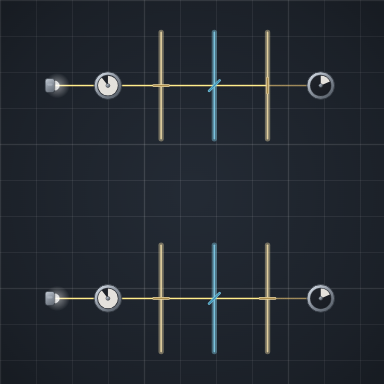
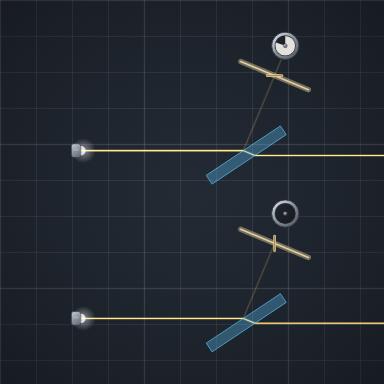
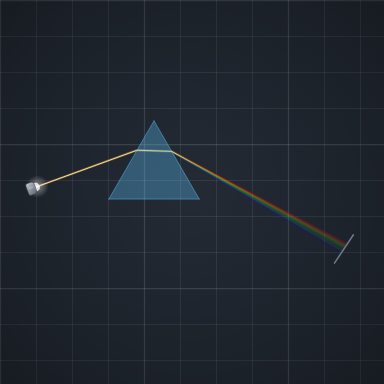
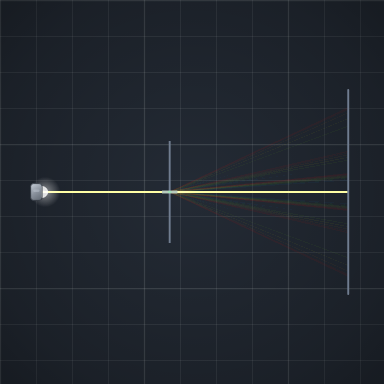
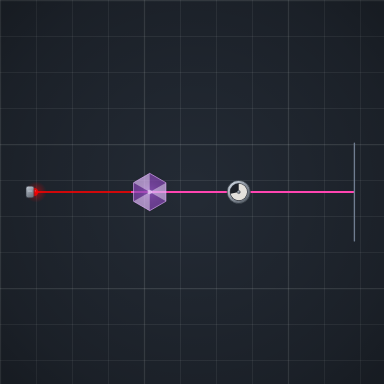
A shallow prism, really two weak prisms back to back, splits one beam into two that overlap as if they came from a pair of virtual slits. Fresnel used that to get interference without cutting two holes in a card — useful when critics said Young’s slit demos were just “edges doing something odd”.
The same year he won the Academy prize. Poisson, arguing against him, noticed the theory predicted a bright spot in the centre of a circular shadow. Arago looked, and the spot was there. This bench is the biprism half: two bundles on the screen, no hole in a card.