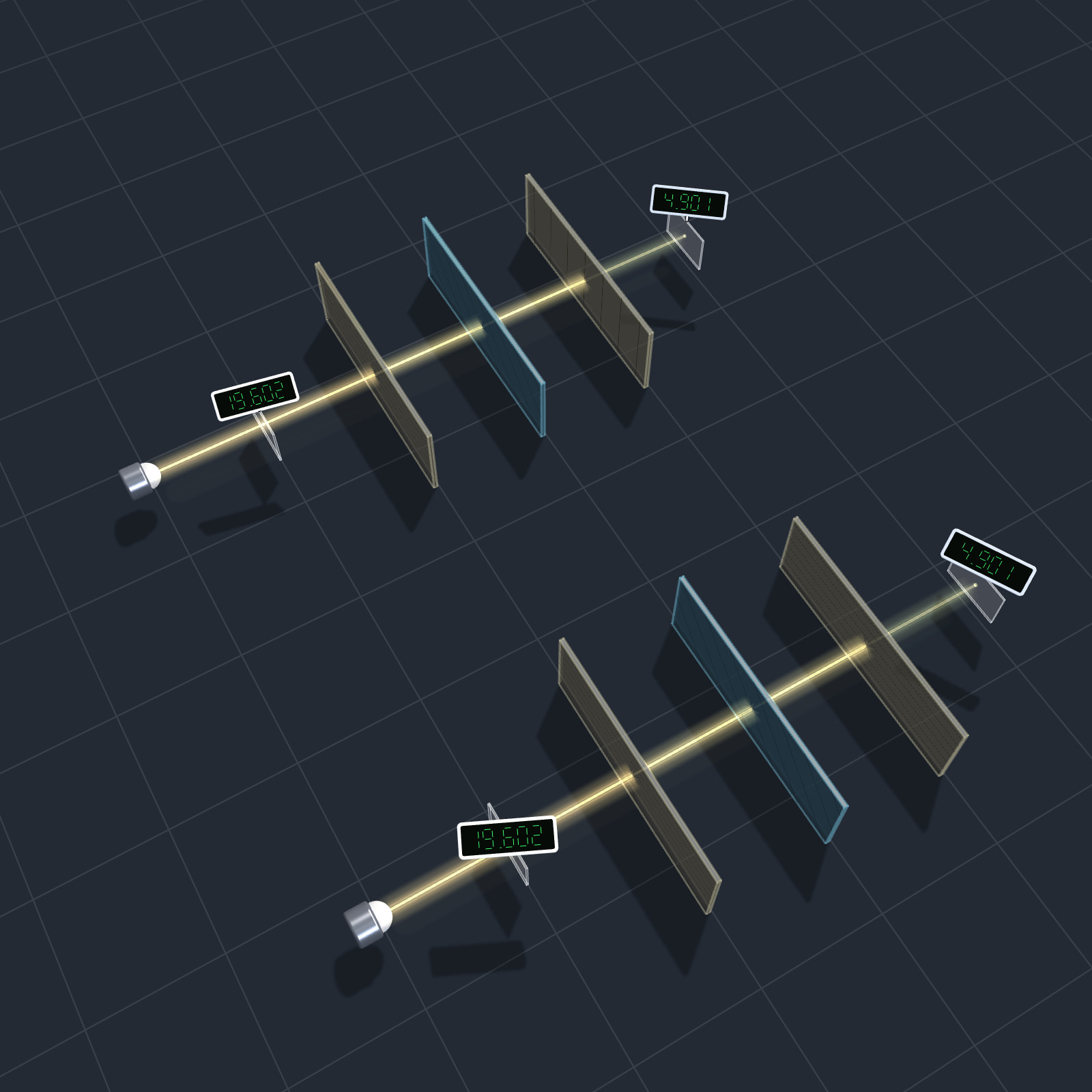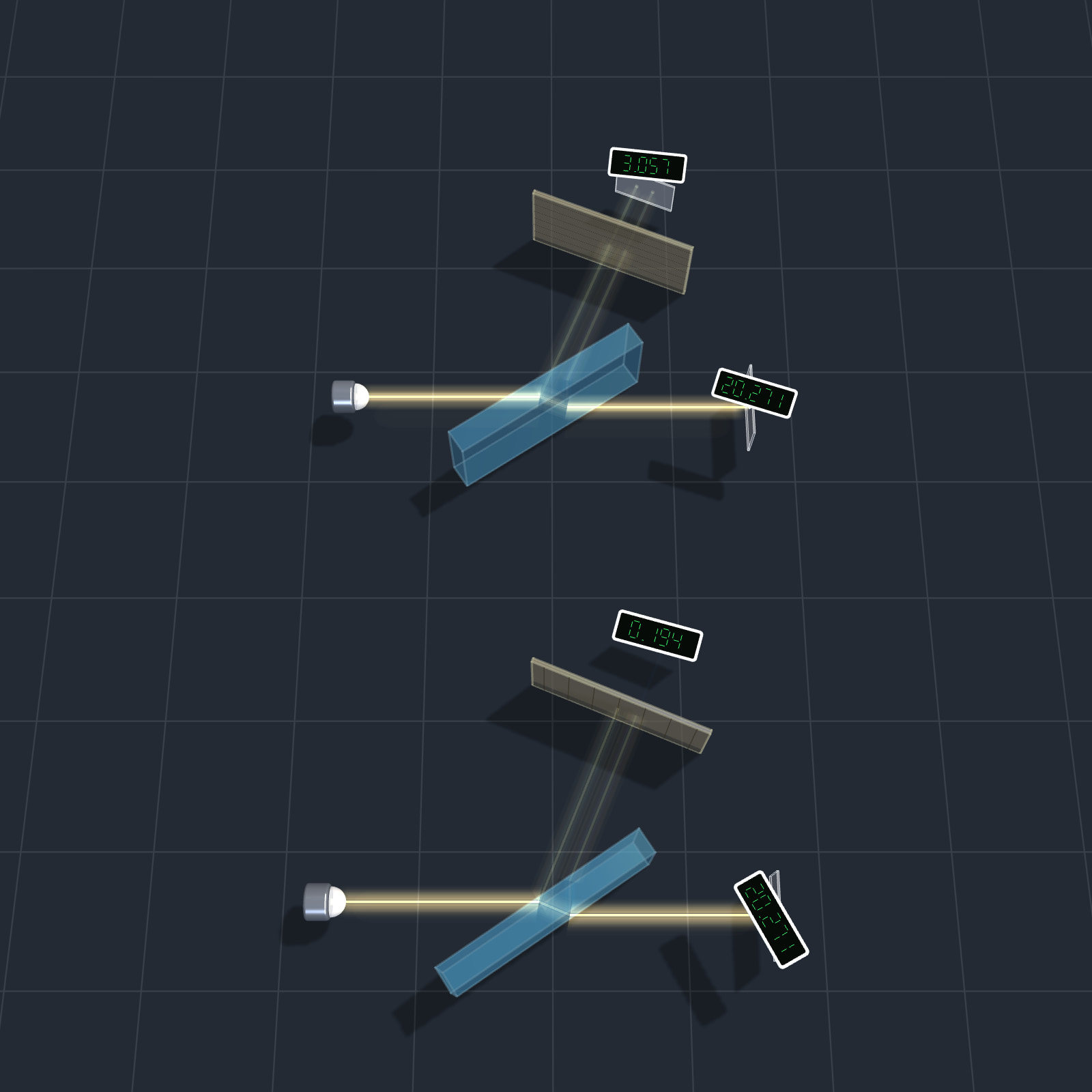
The beam strikes glass at a special angle where the reflection becomes almost completely polarized. An analyzer passes one polarization and blocks the other, so the reflected glare can be made bright or nearly invisible.
This angle depends on the refractive index of the glass; David Brewster described the relation in 1815. Camera polarizers use the same effect to reduce glare from water and windows. Tilt the glass here and the condition for complete extinction is lost.