Brewster was looking at minerals between polarizers when he noticed that two or three long mirrors in a tube turn a handful of beads into a repeating rose. He named it from the Greek for “beautiful form to look at” and patented the toy in 1817.
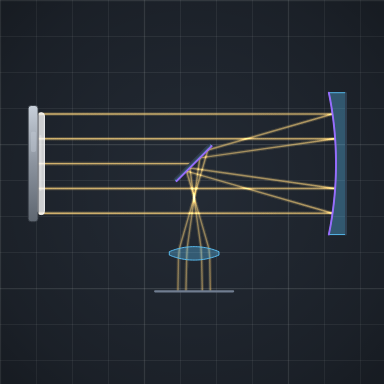
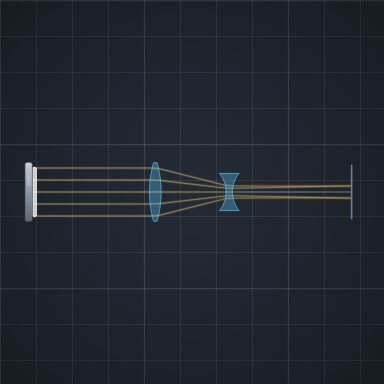
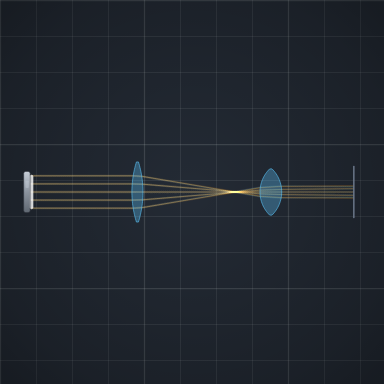
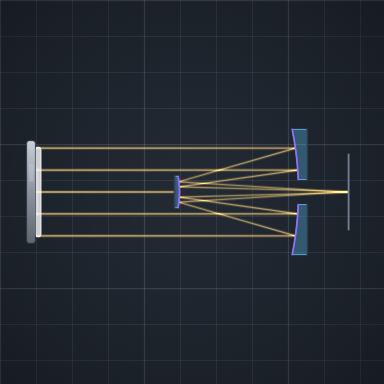
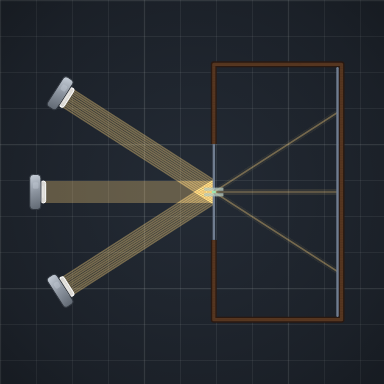
London shops sold something like two hundred thousand in three months. Brewster later grumbled that the patent was easy to dodge: anyone could glue mirrors into a tube. The physics is just multiple reflections — this bench is a three-mirror triangle with cyan, amber, and red fans bouncing until the field fills.